Research
Sebring researches visual narrative in the large image archives of the digitized historical record. She posits a relational grammar of images and digital-native authoring tools diverging from traditional text-based forms to convey image-based testimony.
Visual Narrative
Sebring’s doctoral thesis, Visual Narrative: A Theory and Model for Image-Driven Digital Historiography based on a Case Study of China’s Boxer Uprising (c. 1900), develops a software design for image-based historiography called the Visual Narrative Field (VNF) model, positing that meaning is derived from a field of image comparisons wherein images serve as the “narremes” that are the core elements of a visual grammatical structure.
The model links databases with narrative pathways in a structure based on her work with visual data in the MIT Visualizing Cultures project that investigated how the practice of history can respond to the digitized visual record. Visual sources convey voices and subtexts that communicate new aspects of the past.
In contrast to written texts, visual data fields sustain a fluid state of unresolved complexity that mirrors the way in which historical events unfold. Sebring’s VNF model gives authors the tools to design image relationships that convey history and analysis through the images themselves.
“March 1900” VR Prototype
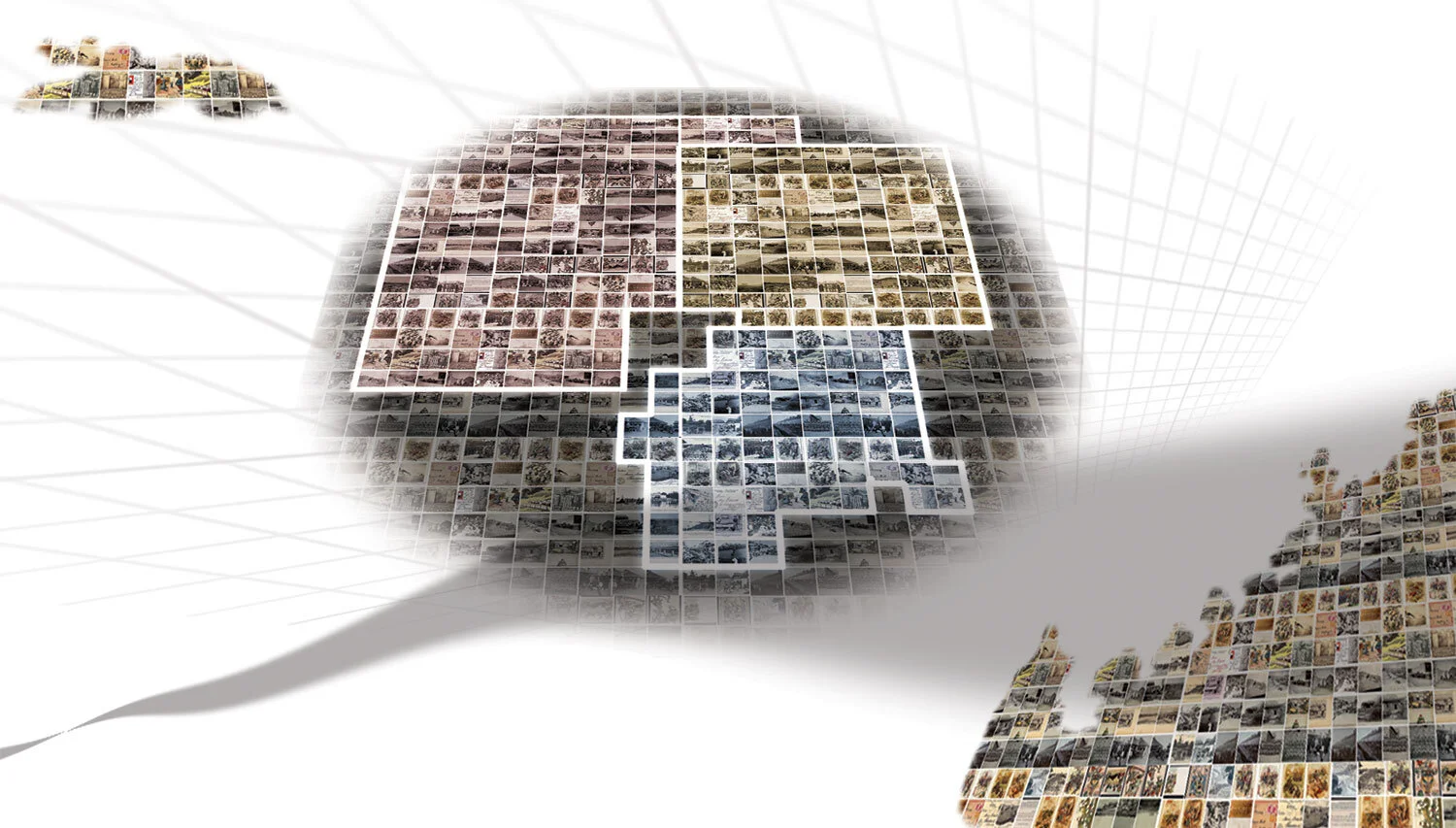
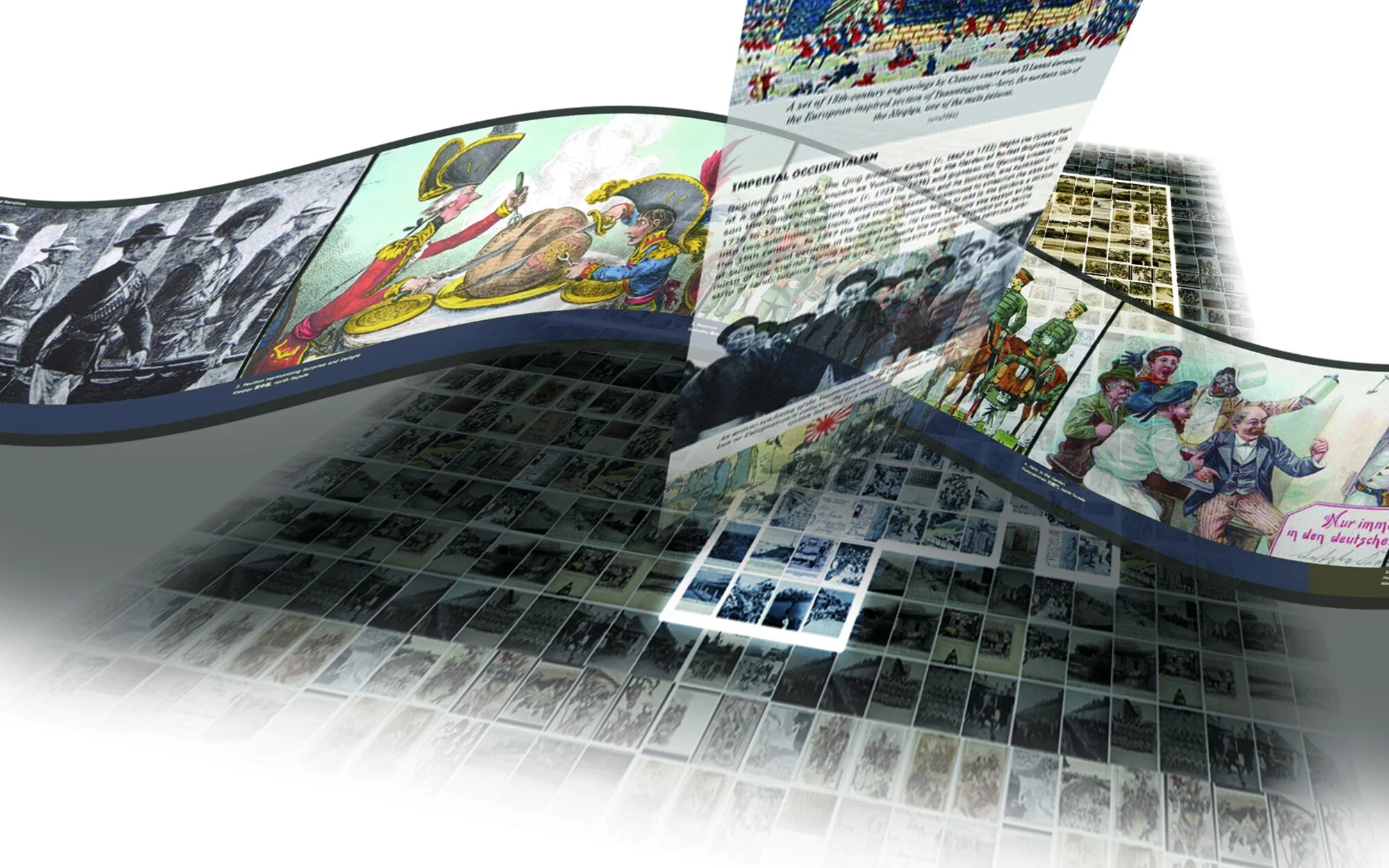
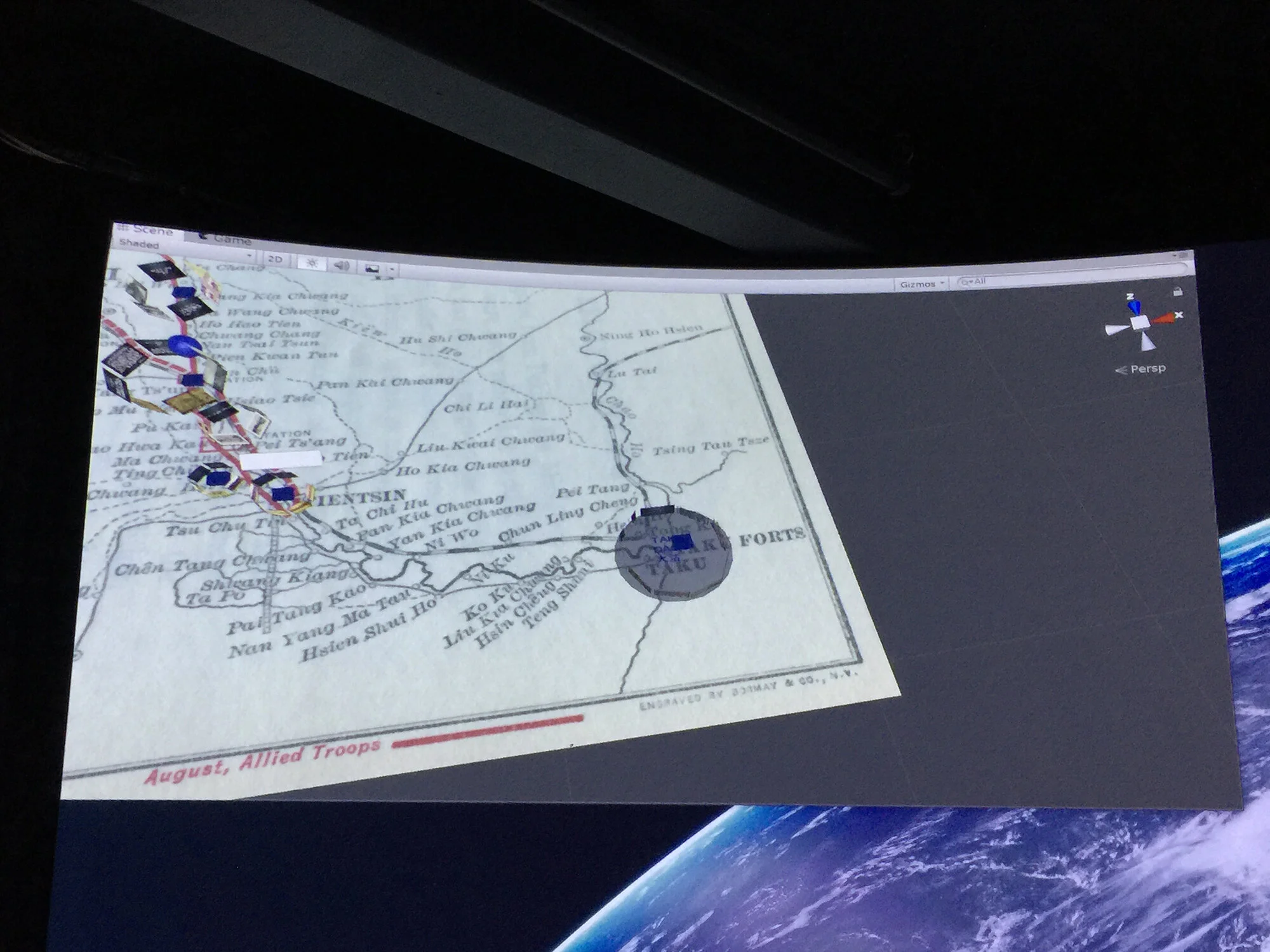
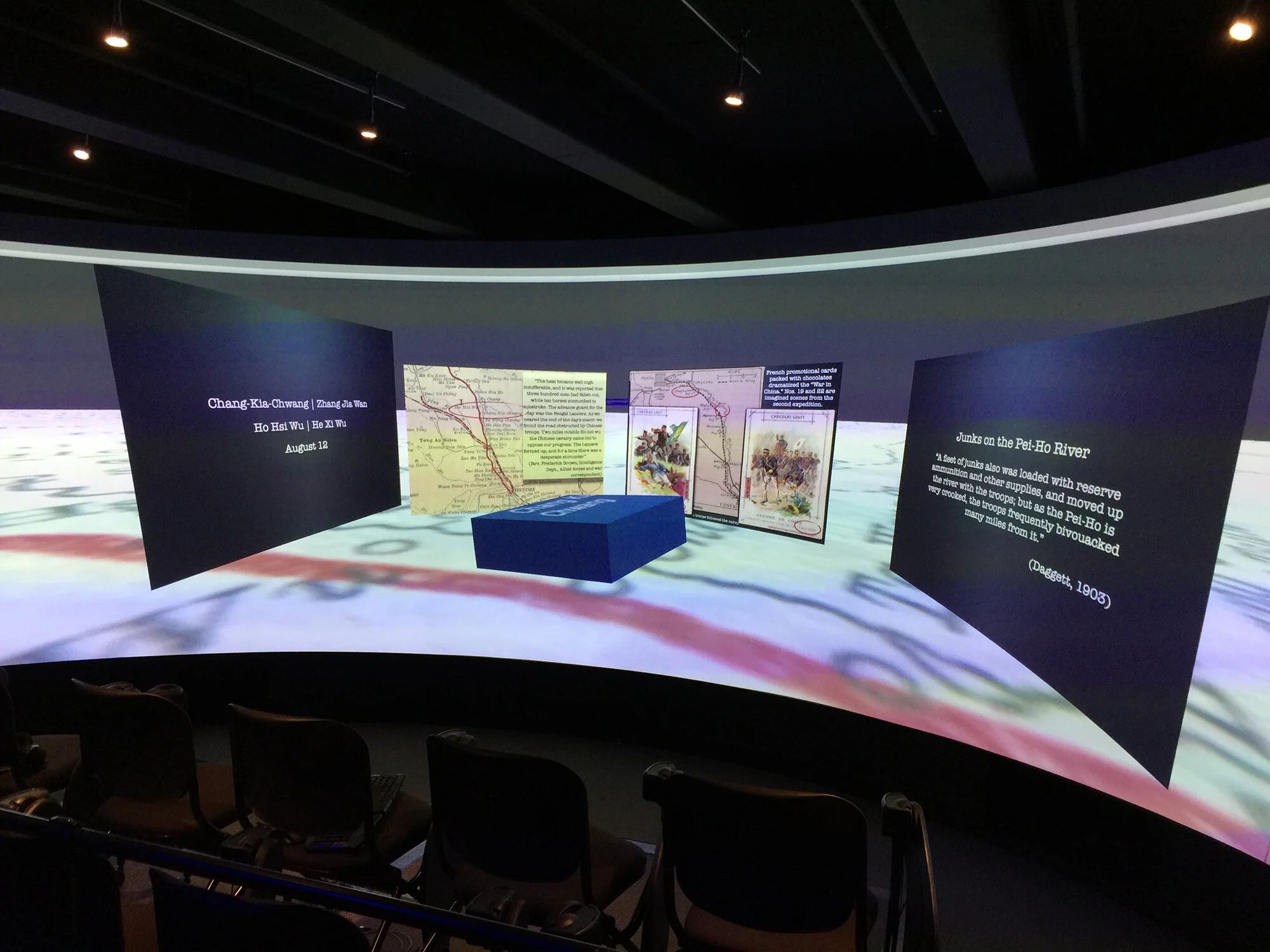
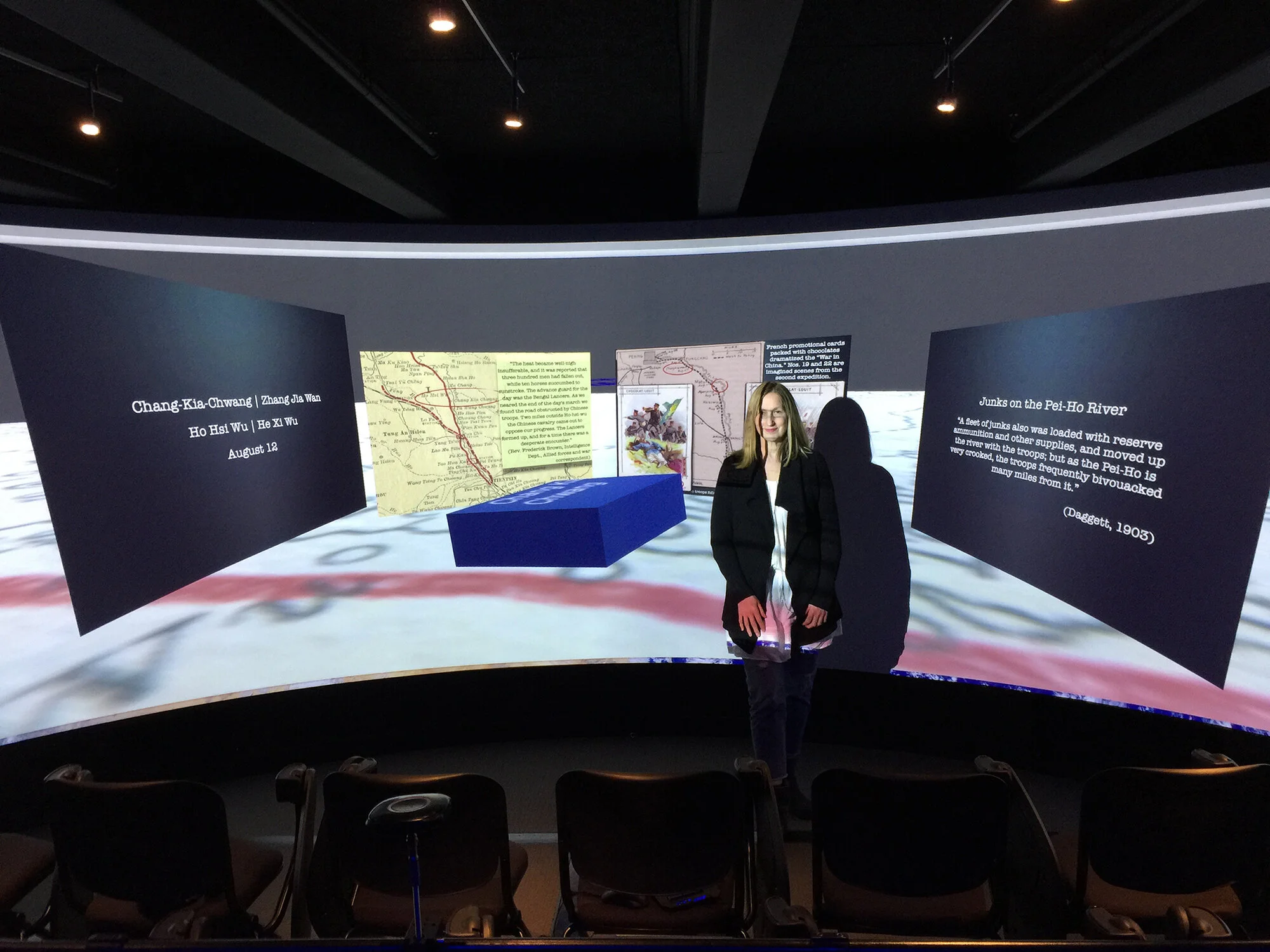
Sebring designed the Virtual Reality project, March 1900, as an experiment in immersive historical narrative visualizing the 10-day march on Beijing in August 1900 by invading armies. The VR journey merges period maps and images to follow the eight-nation army sent to relieve a siege of the diplomatic quarter. The project reimagines a digital archive as a spatial experience that evokes the tactile qualities of the past and physical archives.
The complexity of the Boxer Uprising emerges through intersecting thematic pathways. Each “pathway” features maps, graphics and photographs taken along the army’s route in order to convey the physical conditions and unfolding events. Illustrated news offers the view from the outside world.
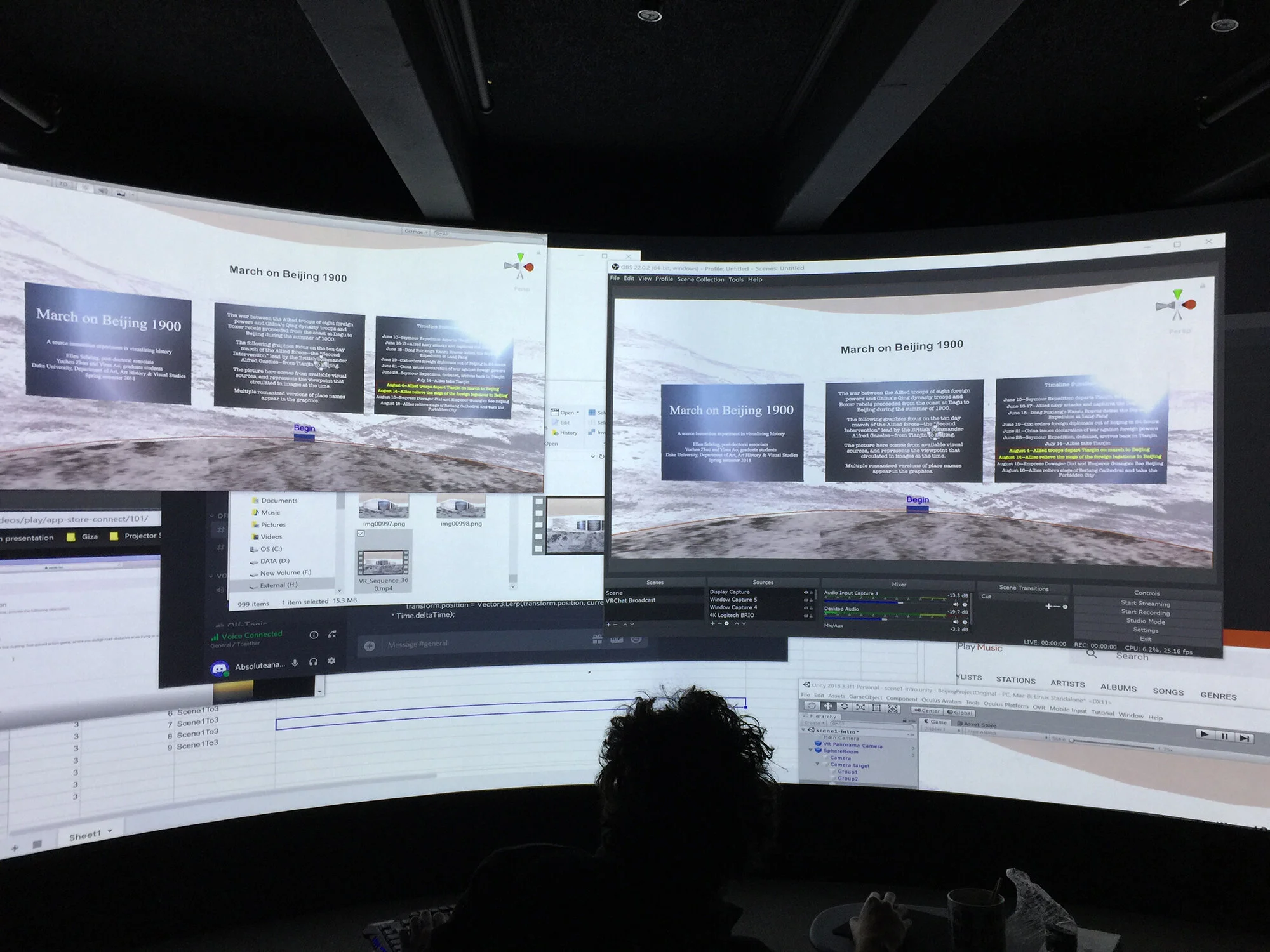
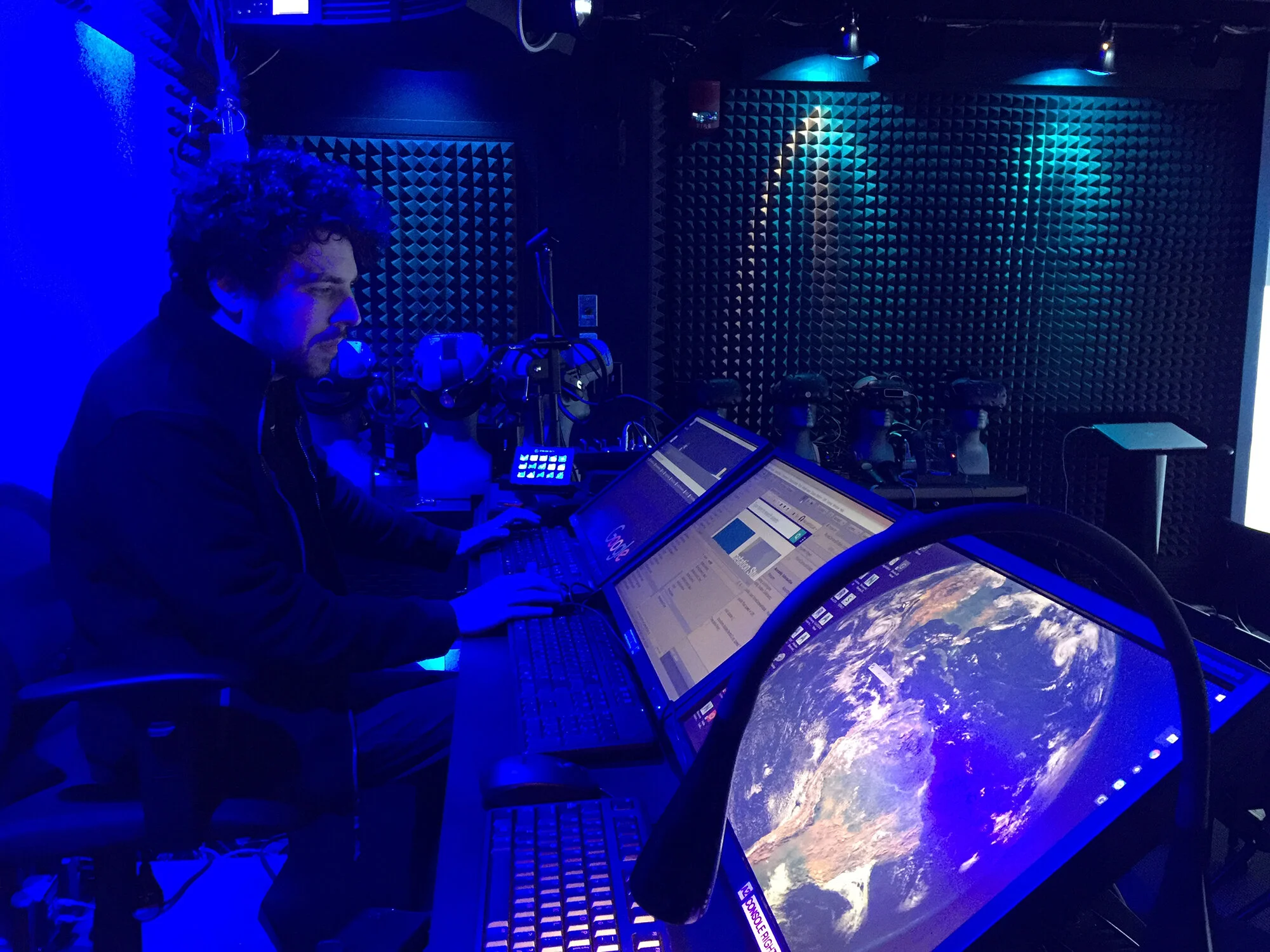
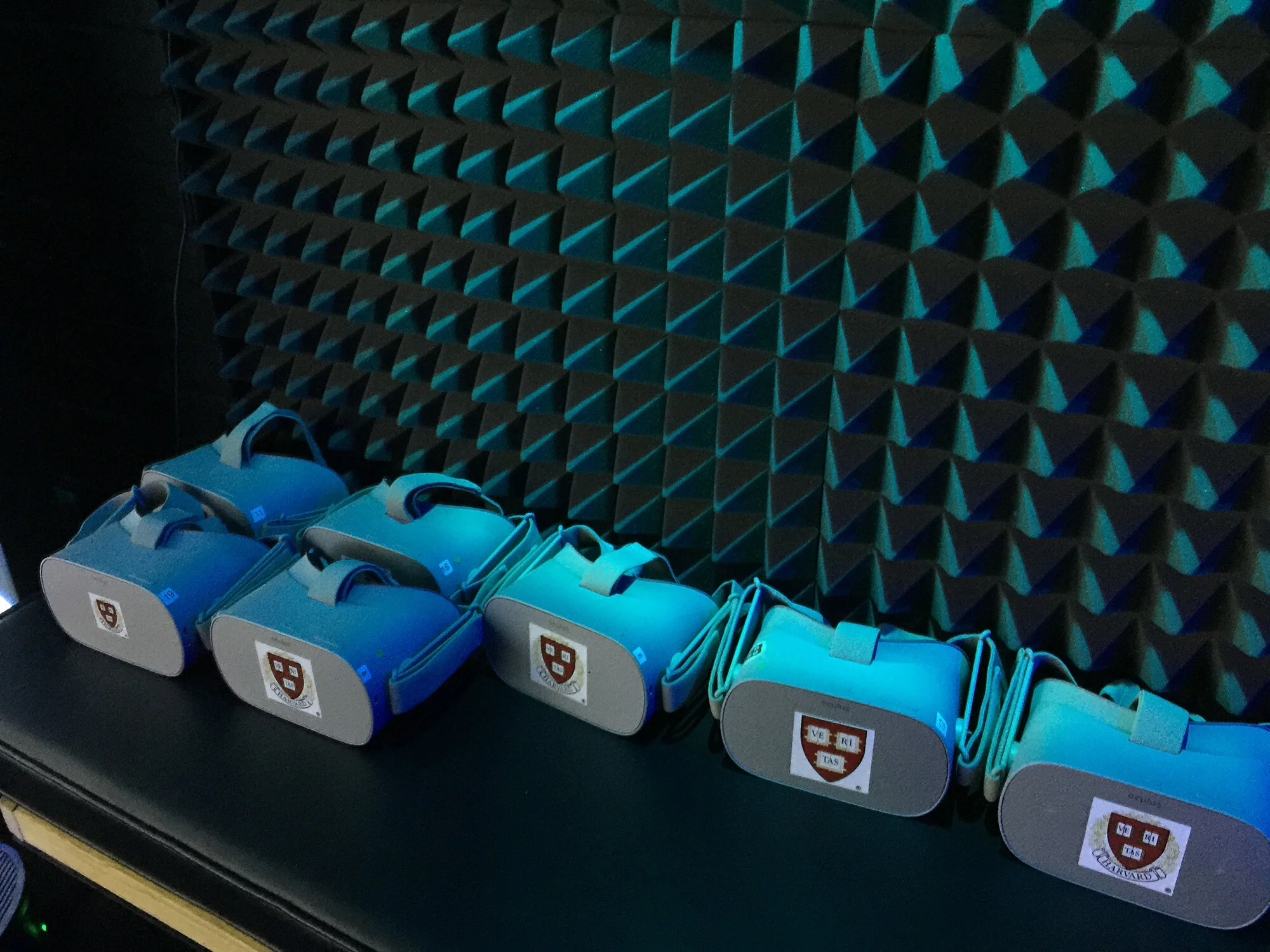
The VR prototype was coded for Oculus Rift by Sebring’s students at Duke University, and further developed at the Harvard Visualization Lab. Sebring presented a beta version of the project at the Association for Asian Studies conference in 2019. Images: working on the March 1900 VR project at the Harvard Visualization Lab; photos by Rus Gant, lab director.
Books
2021 “Visuality as Historical Experience,” chapter for Access and Control in Digital Humanities, Shane Hawkins, editor, Routledge, London and New York
2019 Centerbook: The Center for Advanced Visual Studies and the Evolution of Art-Science-Technology at MIT by Ellen Sebring and Elizabeth Goldring, SA+P Press | ZKM Karlsruhe, distributed by MIT Press
Theses
2016 Visual Narrative: A Theory and Model for Image-Driven Digital Historiography based on a Case Study of China’s Boxer Uprising (c. 1900), PhD Thesis, University of Plymouth, Plymouth, UK
1986 Musical Form in Non-Narrative Video, SMVisS Thesis, Center for Advanced Visual Studies, Department of Architecture and Planning, Massachusetts Institute of Technology, 1986
Publications
2022 “The Second Opium War,” with Peter C. Perdue, Yale University, unit on MIT Visualizing Cultures
2019 “The Light Silo as Insight into Otto Piene’s Art Farm Home in Groton,” catalog essay, Fire and Light: Otto Piene in Groton 1983–2014, Fitchburg Art Museum, February 9–June 2, 2019
2017 “The Boxer Uprising—II: War & Aftermath,” with Peter C. Perdue, Yale University, unit on MIT Visualizing Cultures
2016 “The Boxer Uprising—I: the Gathering Storm in North China,” with Peter C. Perdue, Yale University, unit on MIT Visualizing Cultures
2016 “The Whole and the Journeys: Computational Historiography in the Optical Data Field,” Art and Consciousness in the Post-Biological Era, Shanghai Institute of Visual Art, Shanghai, China
2015 “Civilization & Barbarism: Cartoon Commentary & ‘The White Man’s Burden’ (1898–1902),” The Asia-Pacific Journal, Vol. 13, Issue. 27, No. 2, July 06, 2015
2014 “Civilization & Barbarism: Cartoon Commentary & the ‘White Man’s Burden’ (1898–1902),” unit on MIT Visualizing Cultures
2012 “Atmosphere: Disorientation in Visual Narrative as a Time Traveler’s Tool,” MutaMorphosis Conference proceedings, Academy of Sciences, Prague
2012 “World on the Head of a Pin: Visualizing Micro and Macro Points of View in China’s Boxer War of 1900,” Transcultural Tendencies | Transmedial Transactions, Ascott, Roy and Yuan, Xiaoying, editors, Volume 20 Numbers 2 & 3, Intellect, Ltd., Bristol, UK, 2012 (229-237).
2012 “Around Me: Granularity through Triangulation and Similar Scenes,” Technoetic Telos: Art, Myth and Media Part 2, Ascott, Roy and Karoussos, Katerina, editors, Volume 30, Number 3, Intellect, Ltd, Bristol, UK, 2012 (69-78).
2011 “Acts of Authoring within a Visual Narrative Field,” Consciousness Reframed 12: Presence in the Mindfield: Art, Identity and the Technology of Transformation, Ascott, Roy and Girao, Luis Miguel, editors, Universidade de Aveiro, Portugal, 2011 (235-239).
2010 “Picture Pathways as Threads through Time: from Opium to Boxers, China 1838-1900,” Making Reality Really Real, Consciousness Reframed 11, TEKS Publishing, Trondheim, Norway, 2010 (179-180).
Image top of page: March 1900 interactive Virtual Reality prototype, testing immersive archive design, Ellen Sebring, at the Harvard Visualization Lab, 2020.